High-precision fiber cutters, automated CO2 engravers, and robust handheld welding systems engineered for Spain’s architectural and elevator component suppliers.
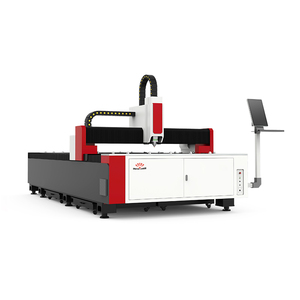
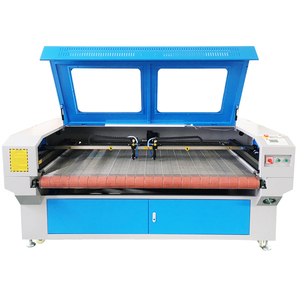
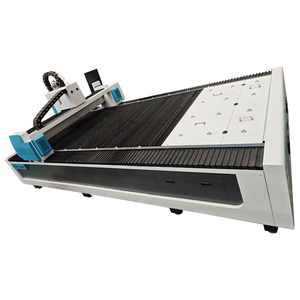
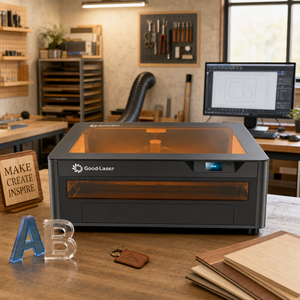
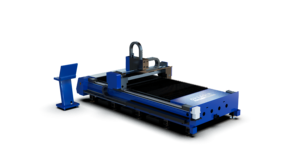
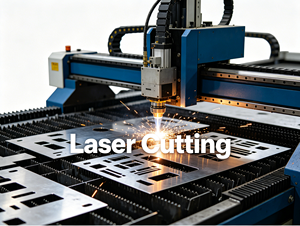
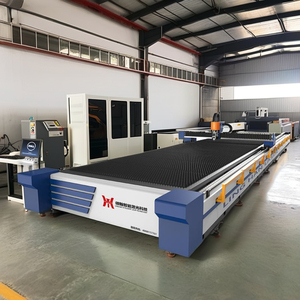
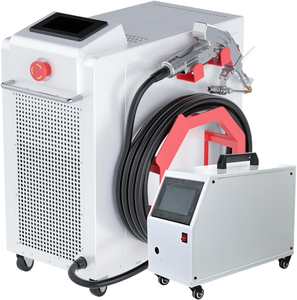
Spain stands as an undisputed leader in the European vertical transportation industry. Boasting one of the highest elevator densities per capita globally with over 1.1 million active installations across residential, commercial, and public infrastructure, the Spanish elevator market demands exceptional manufacturing precision, adherence to stringent safety regulations, and superior aesthetic finishing. Tier-1 regional original equipment manufacturers (OEMs)—including industry powerhouses like ORONA, MP Ascensores, and MacPuarsa—along with thousands of specialized sheet metal subcontractors in key industrial clusters such as the Basque Country, Catalonia, Madrid, and Andalusia, rely heavily on ultra-precise automated processing tools.
Manufacturing modern elevator cabs, landing doors, structural guide rail brackets, car frames, and ceiling panels requires processing a wide range of materials. Stainless steel sheets (primarily AISI 304 and AISI 316L with hairline, mirror, or etched decorative finishes) dominate cab aesthetics, while heavy-gauge carbon steel plates form the structural skeleton. Modern production facilities must overcome critical challenges: preventing surface scratches on protective film-coated stainless steel, eliminating thermal distortion on extended cabin wall panels (up to 3000mm in height), and ensuring absolute burr-free cuts to satisfy the strict safety mandates of Directive 2014/33/EU and UNE-EN 81-20 / EN 81-50 standards.
Precision CNC fiber lasers and versatile CO2 units play a fundamental role across distinct components of an elevator assembly:
Cutting 1.2mm–2.0mm stainless steel sheets with delicate surface films. High-power fiber lasers utilizing non-contact capacitive sensing prevent scratches while processing intricate lighting cutouts and ventilation louvers.
Processing 6mm–16mm heavy structural carbon steel plates. High-power 8kW to 12kW fiber lasers deliver high-speed, zero-taper cuts on load-bearing crossheads and safety gear mounting plates.
Intricate decorative cutting of elevator ceilings, hall call station faceplates, and COP buttons using high-precision CO2 laser systems (for hybrid organic/acrylic layers) or fine-spot fiber laser markers.
Selecting the optimal laser power source directly impacts total cost of ownership (TCO) and daily throughput on the factory floor. The table below outlines empirical processing parameters customized for elevator component fabrication.
| Elevator Sub-Assembly | Primary Material | Thickness Range | Recommended Power | Assist Gas type | Cutting Speed Range |
|---|---|---|---|---|---|
| Landing Door Panels | AISI 304 Stainless Steel | 1.2 mm - 1.5 mm | 3000W / 4000W Fiber | High-Pressure Nitrogen (N2) | 35.0 - 50.0 m/min |
| Car Wall Enclosures | Hairline / Mirror Stainless | 1.5 mm - 2.0 mm | 6000W Fiber | High-Pressure Nitrogen (N2) | 40.0 - 55.0 m/min |
| Guide Rail Brackets | S235JR Carbon Steel | 8.0 mm - 12.0 mm | 6000W / 8000W Fiber | Oxygen (O2) / Mix Gas | 2.2 - 4.5 m/min |
| Structural Car Frames | S355 Structural Steel | 12.0 mm - 20.0 mm | 12000W / 15000W Fiber | Oxygen (O2) Bright Cut | 1.5 - 3.2 m/min |
| Decorative Ceiling Inserts | PMMA / Acrylic / MDF / Brass | 3.0 mm - 10.0 mm | 150W - 180W CO2 / Fiber | Compressed Air / Nitrogen | 0.8 - 2.5 m/min |
| Handrail Connections | Stainless / Brass Tubes | 2.0 mm - 4.0 mm (Dia 38-50) | 3000W Tube Fiber | High-Pressure Nitrogen (N2) | 12.0 - 18.0 m/min |
In accordance with Spanish National Energy and Climate Plans (PNIEC) and EU green directives, elevator OEMs in Spain are redesigning lift cabins to minimize weight without compromising structural integrity. Lighter cabins consume significantly less electrical energy during traction cycles. Fiber laser cutting machines facilitate precise weight-reduction topology (such as engineered cutouts in non-structural internal frames) while maintaining exact structural load ratings.
Labor costs in Southern and Western Europe necessitate automated shift operations. Spanish fabricators are rapidly replacing standard single-table setups with dual-pallet exchange table fiber lasers (e.g., 4015 and 3015 platforms). By loading a raw sheet onto pallet B while the laser actively processes pallet A, spindle-on time increases from ~60% to over 88%, dramatically mitigating idle loading times.
A significant portion of Spain’s residential building stock was constructed prior to 1980, requiring retrofitted elevator shafts into tight staircase wells. These projects call for highly customized, non-standard cabin dimensions. Flexible CNC laser programming allows fabricators to switch seamlessly from standard 1000mm door blanks to bespoke 735mm historic building retrofits in seconds, eliminating costly stamping die retooling.
As a vertically integrated original equipment manufacturer (OEM), Marvel Industrial Solution engineers, machines, wires, and tests complete CNC fiber laser, tube cutter, and specialized automated systems in-house. We bridge the gap between factory-direct cost efficiency and rigorous European engineering expectations.
Every laser frame undergoes structural stress-relieving heat treatment and precision horizontal gantry milling, guaranteeing positional stability at 100m/min traverse speeds over decades of continuous operation.
Integrated with world-leading fiber laser sources (IPG/Raycus/Max), auto-focus cutting heads (BOCI/Raytools), Japanese Yaskawa/Fuji servo drives, and Schneider electrical systems with localized CE documentation.
Comprehensive sea-worthy vacuum packaging, complete schematic electrical diagrams, pre-shipment cut test video verification, remote diagnostics, and rapid delivery of first-year consumables.
Get fast, expert answers regarding machine procurement, EU compliance, gas selection, and operational costs for Spanish lift manufacturers.
For standard 1.2mm to 2.0mm stainless steel elevator door skins and wall enclosures, a 3kW to 6kW fiber laser offers the optimal balance between initial capital investment and high-speed processing. A 6kW fiber laser utilizing nitrogen assist gas can cut 1.5mm stainless steel at speeds exceeding 45 meters per minute, delivering perfectly clean, oxide-free edges ready for immediate panel folding.
Our fiber laser systems are equipped with non-contact capacitive height sensors that maintain a precise distance (e.g., 0.5mm to 1.0mm) from the sheet surface without touching the material. Additionally, we program a low-power laser film-vaporization pass prior to the main cut, melting the protective PVC film cleanly without scorching or marking the underlying mirror or hairline stainless steel finish.
Yes. All export machinery configured for the Spanish market complies fully with European Union Machinery Directive 2006/42/EC, Low Voltage Directive 2014/35/EU, and Electromagnetic Compatibility Directive 2014/30/EU. Enclosed Class-1 laser safety housing, dual safety interlocks, emergency stop circuits, and standard CE-marked electrical cabinets are standard on all fully enclosed fiber laser lines.
Oxygen (O2) is typically used for thick carbon steel structural plates (6mm–20mm car frames) because the exothermic reaction reduces gas consumption and power requirements. However, it leaves a light oxide layer. High-pressure Nitrogen (N2) is used for stainless steel elevator panels; it prevents oxidation, leaving a bright silver edge that can be welded immediately. Nitrogen consumption is higher, but it eliminates secondary edge cleaning labor costs entirely.
Absolutely. Our specialized Laser Tube Cutting Machines accommodate round, square, and rectangular structural profiles (up to 220mm diameter / 6000mm length). They execute complex cope joints, slot cutouts, bolt holes, and end trims in a single continuous clamping cycle, replacing manual drilling, sawing, and milling operations.
We supply complete foundation planning drawings, power consumption guidelines, and gas connection specifications prior to delivery. Upon machine arrival at your factory in Spain, our engineers provide complete remote installation guidance or on-site commissioning, including comprehensive training for CAM nesting software (CypCut/HypCut), laser parameter tuning, and preventive maintenance routines.
