
The Evolution of Metal Joining Technology in South Korea’s Manufacturing Ecosystem
South Korea’s modern industrial landscape—anchored by world-leading shipbuilding corridors in Geoje and Ulsan, automotive mega-factories in Asan and Hwaseong, and precision semiconductor machinery hubs across Suwon and Pyeongtaek—demands unprecedented joining integrity, high process speed, and strict thermal distortion management. As global supply chains tighten technical specifications, procurement engineers looking for a reliable welding machine manufacturer & factory in Korea are moving beyond traditional Gas Metal Arc Welding (GMAW/MIG) and Tungsten Inert Gas (TIG) systems toward integrated high-density Fiber Laser Welding and Robotic Special Purpose Machines (SPM).
Traditional arc welding methods present inherent thermodynamic challenges on high-throughput assembly lines: excessive Heat-Affected Zones (HAZ), severe sheet metal buckling, long post-weld grinding cycles, and erratic bead geometry dependent entirely on operator skill. In contrast, state-of-the-art fiber laser welding technology focuses laser beam energy into micro-spot diameters, delivering power densities exceeding 106 W/cm2. This produces keyhole-mode welding with deep penetration, minimal thermal propagation, and exceptional aesthetic consistency without requiring secondary finishing.
Technological Comparison: Arc Welding vs. Fiber Laser Joining Mechanics
To assist Korean procurement officers and manufacturing engineers in technical evaluation, our engineering lab has compiled a side-by-side performance audit comparing traditional manual arc systems against modern factory-grade fiber laser welders:
| Performance Metrics | Legacy TIG Welding | Standard MIG/GMAW | 3000W Handheld Fiber Laser | Robotic SPM Laser Cell |
|---|---|---|---|---|
| Heat-Affected Zone (HAZ) | Wide (>5.0 mm) | Moderate (3.0 - 5.0 mm) | Ultra-Narrow (<0.8 mm) | Micro-Controlled (<0.4 mm) |
| Linear Weld Speed (1.5mm SS) | 0.1 - 0.3 m/min | 0.4 - 0.8 m/min | 2.5 - 6.0 m/min | 5.0 - 12.0 m/min |
| Post-Weld Grinding Needed | Extensive (Mandatory) | Heavy to Moderate | Minimal to None | Zero (Automated Bead) |
| Operator Skill Requirement | Master Welder (Years) | Skilled Operator | Basic Training (Hours) | PLC / Robot Operator |
| Thin Sheet Buckling Risk | Extreme | High | Negligible | Zero (Fixtured) |
| Consumable Overhead | High (Tungsten, Gas) | High (Wire, Nozzles) | Low (Protective Lens) | Ultra-Low (Automated) |
Engineering Advantages: Enterprise Strength & Machine Construction
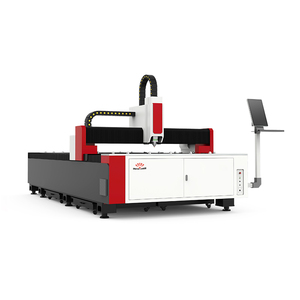
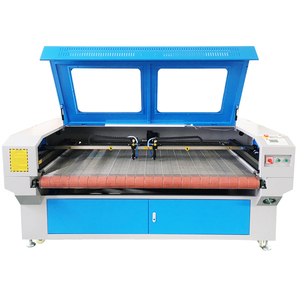
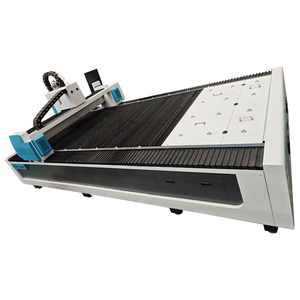
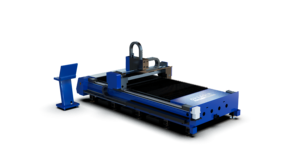
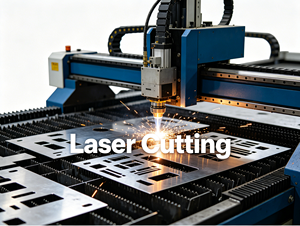
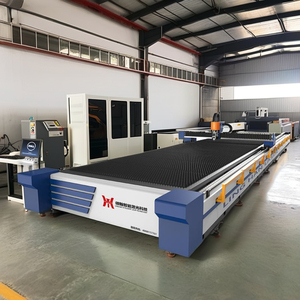
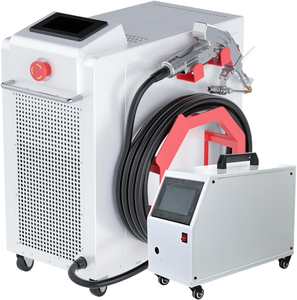
As a global machinery builder supplying advanced fabricators, tier-1 automotive suppliers, and heavy equipment manufacturers, our factory does not operate as a mere assembly trading house. Every CNC laser cutting machine, tube cutter, handheld laser welder, and robotic transfer system is engineered from the ground up to handle 24/7 industrial production environments.
Stress-Relieved Gantry Beds
Heavy steel weldments are high-temperature annealed in our in-house furnace to eliminate internal material tension, ensuring mechanical precision across decades of multi-shift operation.
Tier-1 Electro-Optic Modules
We integrate world-class fiber laser sources (Raycus / MAX / IPG), paired with high-power wobble welding optics and dual-circuit chiller units for stable laser output power.
Integrated Safety & Compliance
Enclosed class-1 laser housing options, interlocked safety circuits, automatic beam cut-off sensors, and heavy fume extraction ports designed to meet KOSHA and CE safety standards.
Automated SPM Engineering
From gantry pick-and-place robots to press transfer automation lines, our engineering team tailors custom fixtures, multi-axis motion controls, and vision guidance systems.
Documented Export Handover
Every overseas unit undergoes rigorous pre-dispatch trial cutting and welding with customer-supplied DXF drawings, delivered alongside complete electrical schematics and spare parts manifests.
Lifecycle Remote Support
Real-time telemetry and video-assisted optical diagnostics enable our field application engineers to troubleshoot parameters, upgrade CAM software, and dispatch wear parts swiftly.
Localized Application Scenarios in Korean Manufacturing Sectors
Korean industrial buyers require laser welding systems customized to specific regional manufacturing mandates. Our machines are engineered to integrate seamlessly into local manufacturing workflows:
1. Automotive & Electric Vehicle (EV) Battery Enclosures (Ulsan & Asan Corridors)
The transition toward electric vehicles in South Korea has created massive demand for lightweight aluminum battery pack housings, copper busbar joining, and tailored blanks. Fiber laser welding systems featuring dynamic wobble heads compensate for joint gap variations while delivering leak-tight structural seams capable of passing IP67 water-ingress testing. Our 3000W water-cooled handheld and robotic laser welders process 6000-series aluminum alloys without hot-cracking issues.
2. Heavy Machinery, Shipbuilding & Offshore Modules (Geoje & Busan Hubs)
Marine fabrication demands deep weld penetration on stainless steel 316L, duplex steels, and thick structural carbon plates. Utilizing high-power fiber laser sources (6kW to 30kW) coupled with hybrid laser-arc heads, fabricators achieve full-penetration butt joints on thick plate sections with minimal pass counts, reducing shield gas consumption and labor hours by more than half.
3. High-Purity Semiconductor Equipment & Cleanroom Frames (Suwon & Pyeongtaek)
Process equipment frames and stainless steel vacuum chambers utilized in semiconductor fabrication require zero oxide contamination and pristine internal bead geometry. Fiber laser welders operating with nitrogen or argon shielding produce mirror-finish, oxidation-free internal seams that prevent particle trap sites, satisfying strict cleanroom vacuum standards.
4. Commercial Stainless Kitchenware, HVAC & Architectural Sheet Metal (Incheon & Changwon)
For high-volume consumer goods, aesthetic appeal is paramount. Handheld fiber laser welders allow operators to execute corner joints, lap welds, and edge sealing on thin stainless sheets (0.8mm to 3.0mm) without surface burning, eliminating tedious buffing and polishing steps.
Korean Procurement & Engineering FAQ
Direct technical answers to common questions raised by plant directors, quality engineers, and purchasing officers in Korea when selecting industrial welding systems:
What electrical configurations do your machines support for Korean factories?
Our industrial laser welding and CNC cutting machines are custom-wired to match Korean industrial electrical standards, accommodating 380V 3-Phase 60Hz or 440V 3-Phase 60Hz systems. Electrical cabinets feature branded Schneider/Siemens contactors, line filters, and strict grounding architectures compliant with local electrical codes.
How does a handheld fiber laser welder perform on reflective metals like copper and aluminum?
Because the 1064 nm fiber laser wavelength is efficiently absorbed by non-ferrous metals compared to legacy CO2 beams, reflective metal joining is highly stable. By combining back-reflection optical isolators inside the laser generator with adjustable wobble beam frequencies (0-300 Hz), our 3000W welders successfully join copper busbars and aluminum structural tubes without optical feedback damage.
What laser power is necessary for my production material thickness?
For stainless steel and mild steel up to 3.0 mm, a 1500W laser source is sufficient. For materials between 3.0 mm and 6.0 mm, or aluminum up to 4.0 mm, a 2000W to 3000W laser system is recommended. Heavy steel plate exceeding 10 mm requires automated 6kW to 12kW laser welding or hybrid laser-arc stations.
What is the expected lifespan and consumable cost of your fiber laser welders?
The solid-state fiber laser source boasts a Mean Time Between Failures (MTBF) exceeding 100,000 operational hours. Operating costs are restricted to electricity, shielding gas (Argon/Nitrogen/CO2), and inexpensive protective optical windows and copper wire-feed nozzles, keeping hourly operating costs exceptionally low compared to electrode-heavy arc welding.
Can your machinery be integrated with external industrial automation and robots?
Yes. All Marvel Industrial Solution machine control boards support standard industrial communication protocols (EtherCAT, Modbus, Profinet). Our systems readily interface with FANUC, ABB, Yaskawa, or custom Gantry Robot systems for automated part loading, continuous seam tracking, and stamping press transfer operations.
How are installation, operator training, and spare parts handled for overseas shipments?
Every machine order includes comprehensive foundation drawings, utility connection requirements, sea-worthy wooden crating, pre-shipment video verification, and complete CAM nesting/welding parameter libraries. We offer both remote video commissioning and on-site engineering installation, backed by documented 1-year and 2-year wear-part kits sent with the shipment.