Direct factory-engineered laser cutting, handheld laser welding, and automated metal fabrication systems tailored for Hamburg's rigorous industrial compliance standards (DIN EN ISO 3834-2 / EN 1090).
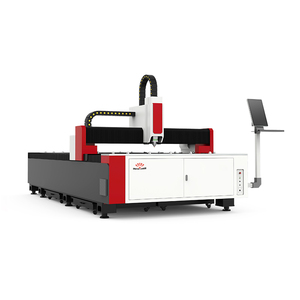
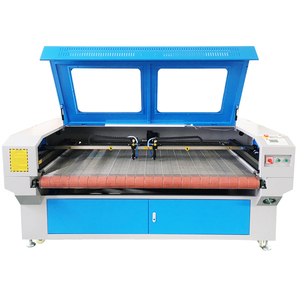
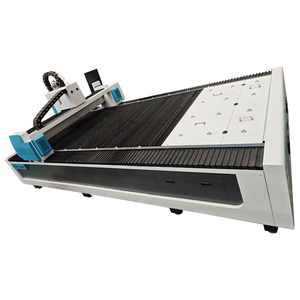
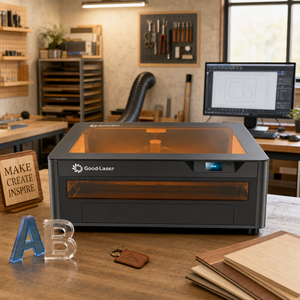
As Northern Germany’s paramount industrial engine and Europe’s third-largest port city, Hamburg represents a unique convergence of heavy maritime engineering, offshore renewable energy technology, aerospace manufacturing, and automated logistics infrastructure. The demand for advanced welding equipment and automated metal processing machinery in the Metropolitan Region of Hamburg (Metropolregion Hamburg) has shifted dramatically from traditional consumable-heavy arc welding toward high-density fiber laser welding and automated robotic processing cells.
Modern fabricators operating along the Elbe river corridor—from Altenwerder to Finkenwerder and Harburg—face dual pressures: stringent European quality directives (such as DIN EN ISO 3834-2 for fusion welding and DIN EN 1090 for structural steelwork) and escalating electricity costs across Germany. Traditional Tungsten Inert Gas (TIG) and Metal Inert Gas (MIG) welding methods, while foundational, present significant operational bottlenecks due to excessive Heat-Affected Zones (HAZ), structural distortion, intensive manual grinding requirements, and high labor dependency.
As a specialized OEM laser system builder and automated welding machine manufacturer, Marvel Industrial Solution delivers targeted joining and cutting platforms engineered specifically to overcome these challenges. By replacing conventional arc welding with keyhole-mode fiber laser welding and dual-wobble beam delivery systems, Hamburg manufacturers achieve up to 10 times higher welding speed, minimal interpass cleaning, and consistent grain-refine joint integrity across stainless steel, carbon steel, marine-grade aluminium alloys, and copper.
The operational profile of industrial machinery in Hamburg differs significantly from general inland manufacturing. Local enterprises demand high resistance to marine corrosion environments, precise mechanical tolerances for aerospace tier-suppliers, and rapid cycle times for logistics container repair yards.
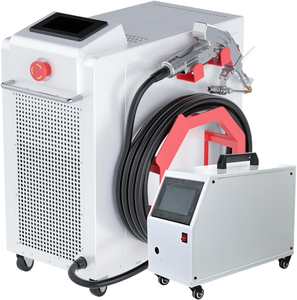
In the shipyards of Hamburg (Blohm+Voss, Werft-Centren, and marine repair hubs), maintaining structural integrity while minimizing sheet deformation is vital. Handheld 2kW to 3kW fiber laser welders are heavily deployed for sealing pipe penetrations, fabricating marine-grade 316L stainless steel tanks, and performing rapid hull maintenance with negligible post-weld grinding.
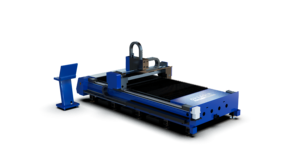
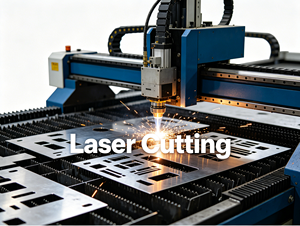
Serving North Sea and Baltic offshore wind farms, Hamburg contractors manufacture heavy monopile internal platforms, cable ladders, and pressure piping for green hydrogen electrolysis facilities. High-power CNC fiber laser cutters (12kW to 30kW) deliver bevel-ready edges on 30mm thick carbon steel plates, eliminating secondary milling prior to robotized multi-pass submerged arc welding.
Hamburg’s aviation sector demands extreme repeatability. Enclosed precision laser workstations and vision-guided laser marking systems allow aerospace suppliers to mark aircraft structural brackets, titanium ducts, and synthetic insulation materials with sub-micron positional accuracy and complete material traceability compliant with AS9100 standards.
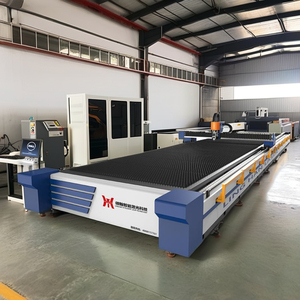
With millions of TEUs moving through the Port of Hamburg annually, container handling equipment, AGVs (Automated Guided Vehicles), and intermodal chassis undergo relentless fatigue stress. Robotic gantry systems and single-table high-power laser cutters streamline the batch production of wear-resistant steel replacement parts and heavy structural frames.
To provide quantified information gain for Hamburg procurement engineers and plant operating officers (COOs), the technical comparison table below illustrates performance metrics derived from real-world shop floor trials processing 4mm 304 Stainless Steel and 6mm S355 Structural Steel.
| Performance Benchmark Parameter | Conventional TIG (GTAW) | Standard MIG (GMAW) | WANZHIDA 3000W Handheld Fiber Laser |
|---|---|---|---|
| Welding Speed (4mm Stainless) | 0.15 - 0.25 m/min | 0.35 - 0.50 m/min | 1.80 - 2.80 m/min (Up to 10x Faster) |
| Heat-Affected Zone (HAZ) Width | Broad (8 - 15 mm) | Moderate (5 - 10 mm) | Ultra-Narrow (0.5 - 1.5 mm) |
| Thermal Distortion & Warpage | High (Requires flame straightening) | Moderate to High | Negligible / Zero Post-Straightening |
| Post-Weld Processing | Heavy Pickling / Grinding Required | Wire Brushing & Slag Removal | Clean Finish / Built-in Laser Seam Cleaner |
| Operator Skill Requirement | High (Certified Master Welder, 3+ yrs) | Medium (Certified Welder) | Low (Trainees operational in 2-4 hours) |
| Power Consumption Efficiency | Low (High heat dissipation) | Moderate | High (>30% Electro-Optical Efficiency) |
| Consumable Expense | Tungsten electrodes, high gas flow | Spool wire, contact tips, gas | Protective lens, low gas rate (Argon/N2) |
Selecting a welding machine manufacturer or factory partner in the Hamburg market requires evaluating total cost of ownership (TCO), machine tool dynamic rigidity, and local technical compliance. Marvel Industrial Solution builds equipment on four foundational pillars of engineering excellence:
All Marvel CNC laser cutting beds and automated welding gantries are constructed using high-tensile structural steel plates. Following heavy gantry welding, every machine frame undergoes a rigorous 600°C thermal annealing cycle inside an industrial furnace, followed by vibration stress relief (VSR) over 24 hours. This process neutralizes internal material stresses, ensuring that machine beds operated in humid, saline port climates maintain absolute geometrical precision (±0.02mm) without twisting over decades of continuous operation.
Rather than utilizing unbranded optical sources, our factory integrates internationally recognized fiber laser generators (such as Raycus, Maxphotonics, or IPG Photonics) paired with intelligent auto-focus cutting and wobble welding heads. Featuring dual-circuit water chilling systems and multi-stage back-reflection isolation mechanisms, our machines safely process highly reflective non-ferrous metals such as copper, brass, and marine aluminium alloys (AlMg3 / AlMg4.5Mn) without risk of resonator damage.
Modern Hamburg factories rely on seamless data interchange between CAD/CAM nesting software and shop-floor MES (Manufacturing Execution Systems). Marvel laser cutters and robotic welding stations incorporate standard EtherCAT digital buses, real-time assist gas monitoring (Oxygen/Nitrogen bright-cut switching), and remote diagnostic telemetry—enabling software parameter tuning, predictive maintenance alerts, and automated job tracking across shift operations.
Understanding local macro-trends ensures that equipment investments made today remain viable and competitive over a 10-to-15-year lifecycle:
Addressing technical compliance, logistics, warranty support, and operational feasibility for buyers in Northern Germany.
Yes. All machines exported to Germany feature complete CE compliance, including Class-1 laser enclosure options, dual-channel safety interlocks, emergency stop circuits, high-efficiency fume extraction interfaces, and EMC-shielded electrical cabinets designed according to EN 60204-1 standards. Equipment documentation includes complete electrical schematics and CE declarations of conformity.
For general job shop fabrication (up to 6mm mild steel and 3mm stainless), 1.5kW to 3kW fiber laser systems offer the best cost-to-speed ratio. For mid-range industrial plate processing (up to 16mm mild steel), 6kW is recommended. For heavy plate cutting in Hamburg shipyards and structural steel shops (20mm to 40mm thick plate), our 12kW to 30kW ultra-high power systems deliver nitrogen bright cutting with zero dross.
Because Hamburg is one of Europe's primary sea logistics hubs, shipping direct from our main export plant to Altenwerder or Container Terminal Burchardkai (CTB) is fast and cost-effective. All machinery is vacuum-sealed with anti-corrosion desiccant wraps and packed into heavy-duty fumigated wooden crates designed for ocean freight. We provide full shipping documentation (Bill of Lading, Packing List, Commercial Invoice, Certificate of Origin).
Yes. Handheld laser welding systems create fully dense fusion welds that meet or exceed ISO 3834-2 and ISO 13919-1 (laser-welded joint quality levels) requirements. The key advantage is that the narrow beam concentrated energy produces microscopic grain structures in the weld seam, yielding higher tensile strength and fatigue resistance while drastically cutting interpass heat input.
We provide comprehensive warranty coverage (up to 3 years on major machine structures and laser sources). Every machine shipment includes a standardized "First-Year Spares Package" containing replacement protective windows, copper nozzles, ceramic rings, and optics. In addition, our remote diagnostic software allows factory application engineers to troubleshoot settings, update CAM software parameters, and guide local technicians online.
We offer a free factory sample testing service. You can send your CAD/DXF drawings along with material grade specifications (e.g., 1.4301 Stainless, S235JR Carbon Steel, AlMg3). Our application laboratory cuts or welds sample parts, compiles a detailed inspection report with high-resolution edge quality photographs and microscopic seam cross-sections, and dispatches the physical samples directly to your Hamburg facility.
Partner with a specialized machinery OEM. Submit your part drawings, material thickness mix, and production targets to receive a custom solution proposal and direct factory quotation.
