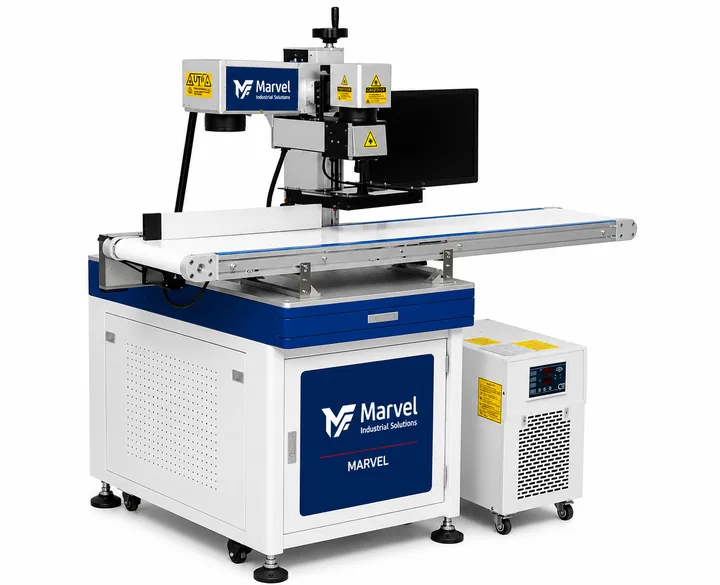
Vision Laser Marking Machine (CCD Visual Alignment)
Our flagship automated marker. Features coaxial visual positioning, sub-pixel feature extraction, and zero-fixture 360° part recognition for electronic trays and micro-components.
Engineered with high-resolution CCD cameras, automated feature recognition software, and sub-millisecond galvo scanning. Place micro-parts, IC trays, or metal components in any orientation — our vision systems locate, align, and mark with perfect accuracy every time.
Marvel Industrial Solution designs, builds, and calibrates high-precision Vision Laser Marking Machines at our manufacturing facility in Ahmedabad, Gujarat, India. Unlike trading vendors who install off-the-shelf cameras onto generic laser frames, our engineering team builds integrated optical-mechanical-software platforms from the ground up.
In modern high-speed production environments—such as SMT tray component marking, medical device UDI etching, semiconductor IC coding, and automotive fastener identification—traditional manual loading into mechanical fixtures causes throughput bottlenecks, operator fatigue, and elevated reject rates due to fixture wear. Our Vision Laser Marking Machine solves these core manufacturing friction points by substituting expensive physical jigs with intelligent, software-driven CCD camera optics.
Understanding the operational shift between traditional fixture-bound laser markers and automated machine-vision laser markers.
| Performance Metric | Traditional Laser Marking System | Vision Laser Marking Machine (CCD Coaxial) | Vision Laser Marking Machine (Off-Axis FOV) |
|---|---|---|---|
| Positioning Method | Manual jig clamping / Mechanical stopper | Coaxial camera optic through galvo lens | Wide-field overhead camera positioning |
| Positioning Precision | ±0.10 mm to ±0.30 mm | ±0.005 mm to ±0.01 mm | ±0.02 mm to ±0.05 mm |
| Part Orientation Requirement | Strict 0° alignment required | Arbitrary 360° rotation, random placement | Arbitrary 360° rotation in tray matrix |
| Fixture Changeover Time | 15 - 45 minutes per product batch | 0 minutes (Instant software job loading) | 0 minutes (Instant template switching) |
| Throughput Speed | 1,200 parts / hour (Operator dependent) | 4,500 parts / hour (Automated tray processing) | 6,000+ parts / hour (On-the-fly conveyor) |
| Defect / Misalignment Rate | 2.5% - 4.0% due to human error | <0.01% (Automated target matching) | <0.02% (Automated target matching) |
| Integrated Quality Check | Manual visual sample inspection | Closed-loop 2D barcode / OCR verification | Full-batch array scan & pass/fail sorting |
Explore our lineup of CCD camera-guided laser marking machines, UV flying markers, and fiber laser platforms tailored for automotive, electronics, medical, and general fabrication industries.

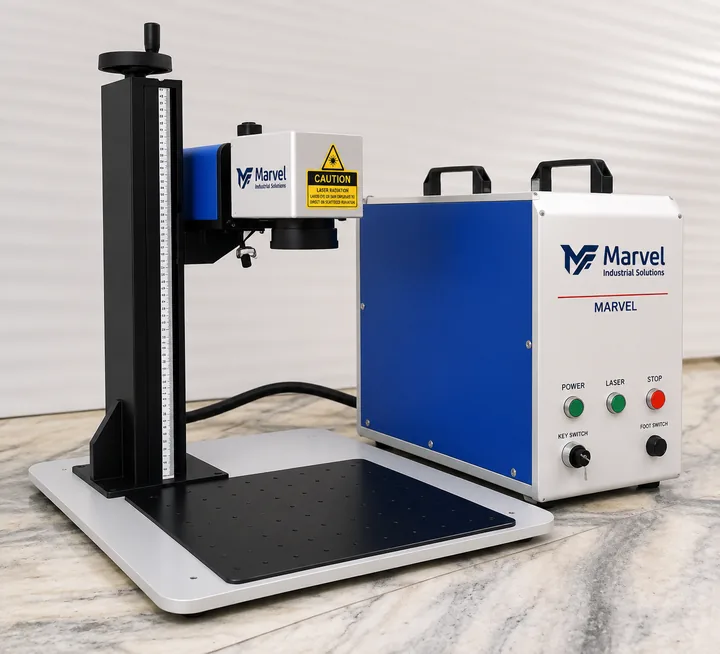
Our flagship automated marker. Features coaxial visual positioning, sub-pixel feature extraction, and zero-fixture 360° part recognition for electronic trays and micro-components.

High-speed workstation for permanent etching, barcode serializing, and logo marking on all metallic surfaces, stainless steel tags, and engineering plastics.

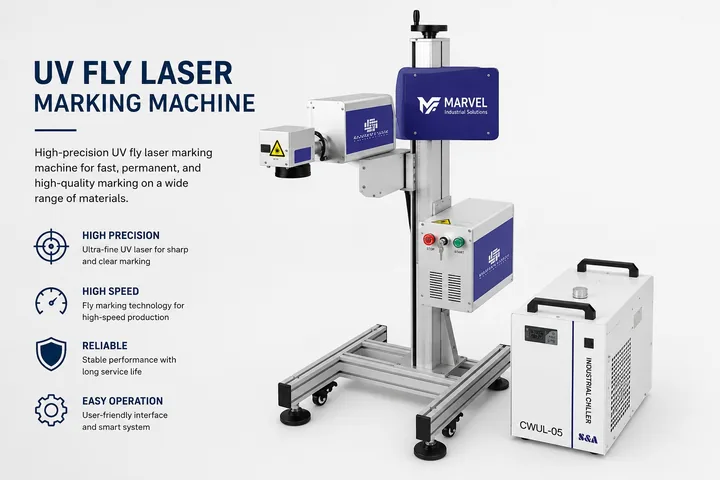
Cold 355 nm ultraviolet laser combined with dynamic conveyor vision positioning. Marks heat-sensitive polymers, medical catheters, and glass without micro-cracking.

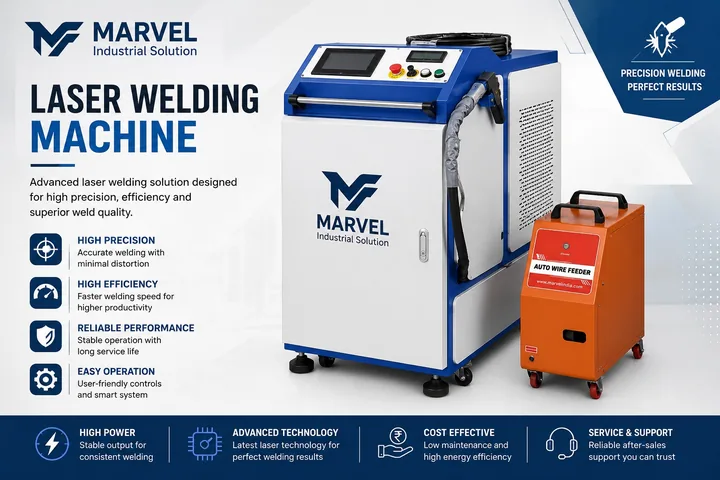
Ultra-fast wobble-head laser welder producing low-distortion continuous seams on stainless steel, aluminum, and sheet metal fabrications with minimal thermal effect.

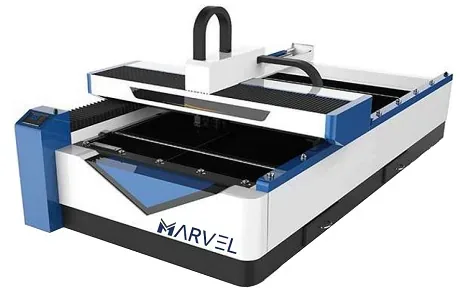
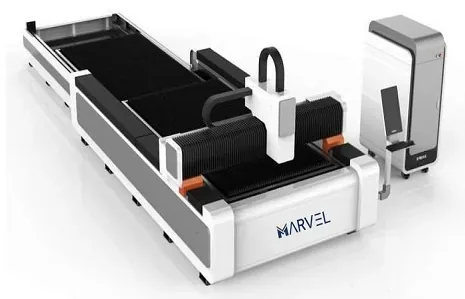
Precision CNC sheet metal cutter with heavy-duty annealed chassis. Cuts mild steel, stainless, aluminum, and copper with crisp, dross-free edge quality.

High-efficiency dual pallet shuttle laser cutter. Load and unload material while the laser cuts continuously, maximizing shift beam-on uptime by up to 35%.
How global procurement directors and manufacturing engineers are adapting to next-generation AI vision technology and Industry 4.0 integration.
Traditional machine vision relies on strict contrast edges. Future-ready procurement favors AI-trained vision algorithms that identify low-contrast, oily, or sandblasted casting parts where surface textures vary unpredictably.
Factory managers are shifting from standalone laser marking booths to dynamic "marking-on-the-fly" (MOTF) conveyor setups. CCD cameras scan moving items at 30 m/min, triggering galvo compensation without slowing line speed.
Global supply chains in automotive (ISO/TS 16949) and medical devices (FDA UDI compliance) now demand automatic 2D DataMatrix code quality grading (ISO/IEC 15415) immediately after etching. Our vision systems grade code contrast and symbol structure instantly.
Factories handling mixed substrates (e.g., metal housings with plastic connectors) are acquiring hybrid systems combining Fiber (1064nm) and UV (355nm) sources into a single vision-guided workstation, eliminating double handling.
Modern buyers reject static standalone software. Procurement specifications require OPC-UA, MQTT, and TCP/IP server integration so the Vision Laser Marking Machine automatically pulls dynamic serial batch data directly from enterprise databases.
Procurement teams are prioritizing MOPA (Master Oscillator Power Amplifier) fiber sources over standard Q-switched lasers due to adjustable pulse durations (1ns to 500ns), enabling high-contrast black marking on anodized aluminum and clean plastic marking.
Marvel Industrial Solution invests continuously in optical research, high-speed vision algorithms, and dynamic focal control to keep our machine platforms at the cutting edge of industrial automation.
Inside Marvel Industrial Solution's machine building facility in Ahmedabad, Gujarat, India.
All laser marking cabinets and optical columns feature heavy welded steel assemblies that undergo thermal stress relief annealing to guarantee structural rigidity and long-term positioning accuracy.
We integrate certified laser sources from Raycus, JPT MOPA, IPG, and Coherent, matched with high-speed Sino-Galvo mirrors and industrial telecentric F-theta scan lenses for minimal field distortion.
Every machine undergoes strict pre-shipment quality control. Global buyers receive high-resolution video testing, optical alignment logs, sample trial etches, and DXF calibration parameters before dispatch.
From micro-electronics to automotive safety components, our vision-assisted markers ensure 100% traceability and zero defect rates.
Comprehensive technical and commercial answers for global buyers, manufacturing engineers, and procurement managers.
A Vision Laser Marking Machine combines an industrial high-resolution CCD camera optical system with high-speed galvo scanners and vision recognition software. When workpieces are loaded onto the marking bed in random positions or angles, the camera captures the field of view, software algorithms compute the precise X/Y translation coordinates and rotational deviation (θ angle), and the laser control board automatically adjusts the marking vector coordinates to etch with exact accuracy without physical mechanical positioning fixtures.
Coaxial vision integrates the camera optics into the laser optical path using a beam splitter, looking directly down through the galvo mirror and F-theta lens at the laser focus. This provides zero parallax error and micro-precision accuracy (±0.005 mm) for very small parts (such as electronic SMD components or medical needles). Off-axis vision uses an overhead side-mounted camera to scan a larger field of view (FOV, e.g., 300x300 mm or larger trays), allowing instant multi-part batch recognition across entire component arrays before laser marking begins.
Our vision recognition software identifies individual part feature points within 0.03 to 0.05 seconds. Standard coaxial systems offer a visual field matching the scan lens size (e.g., 110x110 mm or 175x175 mm), while off-axis and gantry-assisted vision systems can scan working areas up to 600x400 mm. Multi-camera configurations are available for large-format automated tray processing.
Yes. By pairing an off-axis CCD camera with an encoder-tracked conveyor system, our Flying Vision Laser Marking Machine executes continuous "marking-on-the-fly" (MOTF). Parts placed at arbitrary angles on a moving conveyor belt are captured in real-time, tracked dynamically by galvo compensation vectors, etched cleanly, and verified without interrupting belt motion.
The laser source selection is dictated by your part material and contrast requirements:
- Fiber Laser (1064nm, 20W-50W): Ideal for metal engraving, stainless steel, brass, and general alloy parts.
- MOPA Fiber Laser (1ns-500ns pulse): Best for high-contrast black marking on anodized aluminum and true color marking on titanium.
- UV Laser (355nm, 3W-10W): Essential for "cold marking" delicate plastics (PEEK, ABS, PVC), silicon wafers, glass, and medical tubing without micro-cracking or thermal deformation.
- CO2 Laser (10.6μm, 30W-100W): Best suited for organic materials, wood, acrylic, paper packaging, and glass bottles.
Yes. Our integrated machine-vision software includes built-in Optical Character Recognition (OCR), Optical Character Verification (OCV), and 2D barcode grading modules. After etching a serial code or DataMatrix symbol, the CCD camera reads the mark back immediately, rates symbol contrast and cell geometry according to ISO/IEC 15415 standards, and sends a Pass/Fail trigger signal to your automated line PLC.
Our systems feature native industrial connectivity including TCP/IP, Modbus-TCP, RS232, and OPC-UA. The control software can automatically query your plant MES/ERP database via SQL server calls to pull variable serial numbers, batch numbers, or manufacturing dates, generate dynamic barcodes on the fly, and log successful mark records back to the enterprise database for complete digital traceability.
Every machine ships in sea-worthy reinforced export packaging complete with schematic manuals, software installation backups, utility drawings, and recommended 2-year spare parts kits. We offer comprehensive remote diagnostic assistance, video-guided technician support, step-by-step CAD/CAM template creation training, and optional on-site engineering installation worldwide.
Send us your part drawings, component samples, or target cycle times. Our machine vision application engineers will analyze your substrate, recommend the ideal laser wavelength and camera optic configuration, and provide a full technical quote within 24 hours.
Core engineering concepts, processes, and technologies integrated into Marvel Industrial Solution machines.